J-Books
Books by Japanese authors or on topics related to Japan.
-
The Temple of the Golden Pavilion
Author: Yokio Mishima Description: A book about the personal tensions of a Buddhist monk, placed in the historical context of the post-World War II period, around the middle of the 20th century. The action takes place mainly in Kyoto, and the temple is the famous Golden Pavilion (Kinkaku-ji), one of the architectural gems of the city. The author builds the story very well and reveals the climax at the end, where it belongs. Unfortunately, the publisher considered it wiser to write in the summary on the cover an aspect that reveals exactly this climax. I don’t think it’s a very good idea, if the author had wanted the reader to…
-
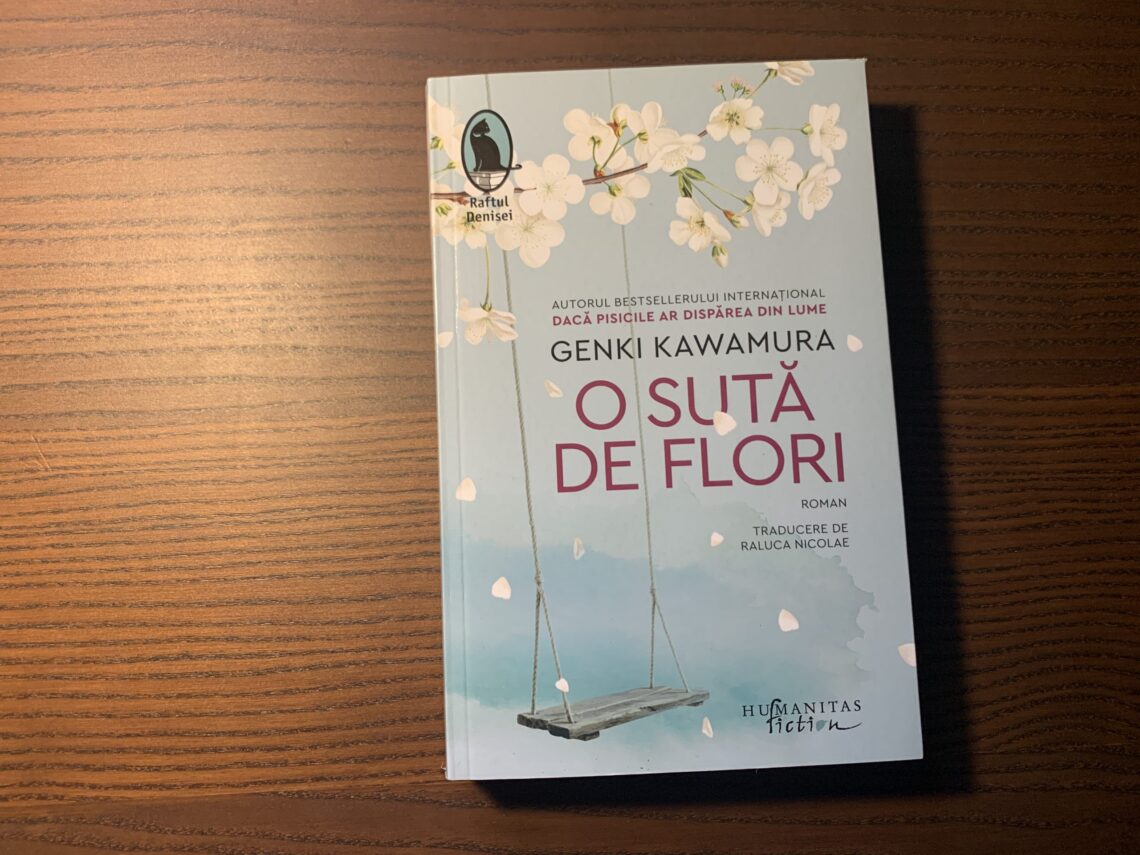
One Hundreed Flowers
Author: Genki Kawamura Description: A Japanese novel 100%, both in style, theme, and in the references the author includes in the text (referring to places, customs, or, especially, to Japanese cuisine). In a family story, the writer captures a dynamism of emotions at different ages, which makes the soul vibrate. A very pleasant and moving reading! Year: 2019 MyRating (1-5): ****
-
The Perfect Guide to Sumo
Author: Katsuharu Ito Description: I purchased this book from the Hokusai Museum in Tokyo (Sumida). Being loaded with classical paintings (woodblock prints), I found the distribution through this store very appropriate and I thought the focus was on the artistic side. In reality, it is a very complex work about sumo, with the author opting to illustrate the book with “classic” images. I think it was an excellent decision! In addition, I discovered that the author, Katsuharu Ito, is a luminary in the field, one of the greatest referees, being the 34th Kimura Shonosuke (the highest rank of sumo referees). The book is bilingual (English and Japanese) and is read…
-
Four Seasons in Japan
Author: Nick Bradley Description: Nick Bradley was born in Germany, but grew up in England (Bath). He lived in Japan for about 10 years, having a very varied life, an opportunity with which he assimilated Japanese culture. His experience is seen throughout the book, the author capturing many specific aspects, nuances and subtleties. I really liked the novel precisely because of these perspectives, which somewhere conveyed to me a similar state to Japanese authors. The story develops around the relationship between the young Kyo, from Tokyo, and his grandmother, Ayako, from Onomichi (Hiroshima prefecture). I liked the explanations related to the famous haiku “The Sound of Water”, by Basho (pg136).…
-
In Praise of Shadows
Author: Jun’inchiro Tanizaki Description: 1933 essay by writer Jun’ichiro Tanizaki (“In’ei Raisan” in the original), translated into English in 1977. The author has a critical analysis reaction of the way Japan was making the rapid transition to a Western lifestyle, specific to those years, with implications at an aesthetic level. Although he has no training in this area, being a writer, with the gift of storytelling, he beautifully packages his perspectives on the traditional Japanese “beauty”, threatened by the rapid and indiscriminate import of Western cultural models. It seems that the description of Japanese toilets has become famous, which, put in context, really takes on a special charm. Moreover, let’s…
-
Wabi Sabi: The Wisdom in Imperfection
Author: Nabuo Suzuki Description: A brief review of some life principles grouped in the wabi-sabi philosophy. Of course, like many other Japanese concepts, the translation is approximate, but in essence we refer to the appreciation of the imperfect and transient character of the world, of ourselves and of the nature that surrounds us. Interesting things: Hermann Hesse was fascinated by the Orient and was a good connoisseur of Japanese culture / Heraclitus’ aphorism: “no man can step into the same river twice, because neither the river nor the man are the same” / “simplicity is the most sophisticated thing” – Leonardo DaVinci (a statement that makes me think of Ana…
-
Queen of Hearts
Author: Akira Mizubayashi Description: Mizubayashi’s novel is somewhat “related” to his previous work, Broken Heart (2019), not only by title, but also by the themes addressed: war, music, love, separation and reunion between generations, Japan and France. Classical music is clearly a passion of the author, with the characters gravitating towards this sphere of interest. Several musical works are mentioned: Shostakovich (11th and 8th symphonies), Strauss (Don Quixote), Mozart’s symphony concertante for violin, viola and orchestra (K364), Bach’s cello suites, sonatas for viola and piano, Opus 120, by Brahms, Schubert’s Arpeggione sonata, Salut d’Amour by Edward Elgar. The films “I Regret Nothing of My Youth” (Akira Kurosawa 1946), “And the…
-
Understanding Comics
Author: Scott McCloud Description: A book written, of course, in comics. A pleasant read, which I think changes the perspective with which we look at this type of… literature? art? entertainment? maybe we can find the answer by going through the pages of the book 😉 Not specifically about Japan, but Japanese artists are analyzed in throughout the book. Year: 1993 MyRating (1-5): ***
-
The City and Its Uncertain Walls
Author: Haruki Murakami Description: A new fantasy novel by “Murakami”, a theme that, the author declares, has been bothering him for many years (being an open subject for several decades, to which he returned to have the feeling that he was closing the story). The world here and the alternative universe, waking and dreaming, love and duty, everything merges into a continuum whose geometry seems to escape us, imperceptibly transferring us from linear to relativism, from flat to multidimensional. Is it worth it in the end to understand everything that happened in the novel? Is it worth struggling to understand the concept of infinity? I don’t think there’s any point,…
-
Kokoro
Author: Natsume Soseki Description: Apparently, it is the best-selling Japanese novel of all time (of course, this label will disappear, maybe not long from now). I read the book in Romanian, translated by Iolanda Prodan. I really like how she translates, using clean, natural language. I will look for more books translated by her. The novel takes place in the Meiji era (1868-1912). The main characters: the author (student), Sensei, Mr. K, the young lady (and a few other relatives). A pleasant read, which flows very well even a century after its publication. Year: 1914 MyRating (1-5): ***
-
The Power of Chowa
Author: Akemi Tanaka Description: Akemi Tanaka was a writer (unfortunately, she passed away in 2021) originally from Japan, from a samurai family. After separating from her first husband, she married a Briton and moved to London, where she continued to promote Japanese culture, on various levels. I really liked the book, it goes into many details related to Japanese culture and the Japanese lifestyle, with very well-chosen explanations and contextualizations. I think that, if it were classified as Help-Yourself-Books (which, personally, do not particularly appeal to me), it would be among the best works I have ever read. But I would hesitate to include it in this category, which seems…
-
An Artist of the Floating World
Author: Kazuo Ishiguro Description: In the original, the words used for the passing world in the title are “ukiyo-e”, better known by the translation “floating world”. However, considering that the action takes place in Japan after World War II, and has little connection to the specifics of Edo period society, I think it is appropriate to use the phrase passing world. The story captures some of the tensions specific to Japan’s transition from “traditional” values to Westernization, the labeling of the “old” and the efforts made to adapt to a new context. Year: 1986 MyRating (1-5): ***
-
An Introduction to Ukiyo-e
Author: Hinohara Kenji Description: A book dedicated to Japanese painting from the 17th-18th centuries, published with the support of the Ota Memorial Museum of Art, Tokyo. I really liked that it is a bilingual edition (English and Japanese), which makes reading more attractive and authentic. I don’t think there is any point in specifying more, the quality is impeccable! Starting from Hishikawa Moronobu (considered the innovator of prints, in black ink, in the second half of the 17th century), to Suzuki Harunobu (1724-1770, who introduced polychrome to prints – nishiki-e, with paintings mainly depicting beautiful women, in the spirit of his time), Kitagawa Utamaro (?-1806, also portraits of women, especially…
-
Pachinko
Author: Min Jin Lee Description: The Korean writer published Pachinko in 2017, but she carried the basic idea of this novel for almost 2 decades, until she brought it to the end. The story is developed around Korean emigrants in Japan, during the tumultuous 20th century, a theme on which she has extensively documented. It made me think of Marquez’s “One Hundred Years of Solitude”, only better localized in time and space. Before reading the novel, I did not know how relevant Pachinko is to the Japanese and even to the country’s economy. Year: 2017 MyRating (1-5): ****
-
Silence
Author: Shusaku Endo Description: A novel related to the 17th-century attempts to Christianize Japan. The book reflects the experience of Portuguese monks facing opposition from the Japanese power and nobility, who did not consider Christianity appropriate for the population and their interests. Year: 1969 MyRating (1-5): ***
-
After the Quake
Author: Haruki Murakami Description: Murakami puts together several stories that, in one form or another, refer to the tragic Kobe earthquake of 1995. This event has only a marginal role in the unfolding of the actions, a background setting. The 6 stories have no other connection between them and, somewhat specific to the author, describe both ordinary life contexts (yes, music and sports are also present in this writing) and some story inserts, full of magic or fantasy. For me it was a pleasant read, but I admit that I prefer, both in Murakami and in other authors, the somewhat more extensive writings, which are more memorable, with whose characters…
-
Hokusai
Author: Rhiannon Paget Description: 2023, ed. Taschen. The author studied at Tokyo University of Arts and has a doctorate in Japanese art history. Being part of the Taschen collection, the book has impeccable quality and a good balance between text and images. It is a good opportunity for a wider exposure to the life and work of Hokusai (1760-1849). In reality, the name of the Japanese painter was completely different (most likely, Kawamura Tokitaro), but in his time it was common for artists to use several names throughout their careers. This has created some difficulties in correctly identifying some works, but we leave this aspect to the specialists. Considering that…
-
On Zen Practice: Body, Breath, and Mind
Author: Taizan Maezumi Description: Ideas related to Zen practice detailed through the teachings of the master Dogen Zenji (who lived in the early 13th century, a member of the Minamoto family and the founder of the Soto school). The book is based on Japanese authors but is produced in the United States, which I have the feeling is reflected during the reading. It insists on Zazen, the static practice of Zen. I find it interesting but I did not find it revealing, I still feel the need to read more on this subject and writings by other authors. Year: ? MyRating (1-5): **
-
The Remains of the Day
Author: Kazuo Ishiguro Description: The British author of Japanese origin achieves an overlap between the description of several significant events of the interwar period (political and diplomatic aspects, related to the relations of the British ruling class and the interactions with Germany and France) and the world seen through the eyes of a butler. He surprises both by the specificity of social interactions so anchored in the traditions of the English (with a fine sense of observation, at times I forgot that the text belongs, however, to a Japanese person…) and by the set of human values that he exposes and, dare I say, subjects to an individual debate for…
-
The Hunting Gun
Author: Yasushi Inoue Description: A story that is read quickly but impresses with its idea and the way in which a life story is exposed, through three letters. Year: 1949 MyRating (1-5): ****